
Why Does My Ube Latte Change Colour?
If you have ever prepared an Ube Latte at home and noticed the colour shifting from a deep violet to a softer lilac, or even taking on a slightly blue or pink undertone, you are not alone. This is one of the most common questions we receive from Ube lovers, and the good news is: it is completely normal and it does not mean your Ube powder has gone bad. 🌸

Before you begin, you can now find all of our UBE products from United Kingdom by clicking here:

In this article, you will discover exactly why your Ube Latte changes colour, what factors influence its shade, and how you can control the process to get the perfect purple cup every single time.

What Gives Ube Its Signature Purple Colour? 🍠
Ube (Dioscorea alata) is a purple yam native to the Philippines, prized for its naturally vibrant colour and subtly sweet, vanilla-like flavour. The pigments responsible for that beautiful violet hue are called anthocyanins. These are the same natural plant compounds found in blueberries, red cabbage, and purple sweet potatoes.
Anthocyanins are not artificial dyes. They are water-soluble pigments that react to their environment. This is precisely why your latte's colour is not fixed. It is alive, in a sense, and it responds to what you add to it.
Understanding this simple science helps you feel confident that any colour variation is a sign of authenticity, not a defect. ✨
The Main Reasons Your Ube Latte Changes Colour
1. The pH Level of Your Ingredients
Anthocyanins are natural pH indicators. This means their colour shifts depending on whether the liquid they are mixed with is acidic, neutral, or alkaline.
- Acidic ingredients (such as lemon-infused syrups, certain plant milks, or a splash of citrus) can push the colour towards pink or reddish purple.
- Neutral to slightly alkaline ingredients (such as regular dairy milk or many oat milks) tend to preserve a rich, true violet shade.
- More alkaline additions (like some baking-soda treated products or certain mineral waters) can shift the tone towards blue or teal.
This is the single biggest factor behind colour changes, and it explains why the same Ube powder can look different depending on the milk you pair it with. 🥛
2. The Type of Milk You Use
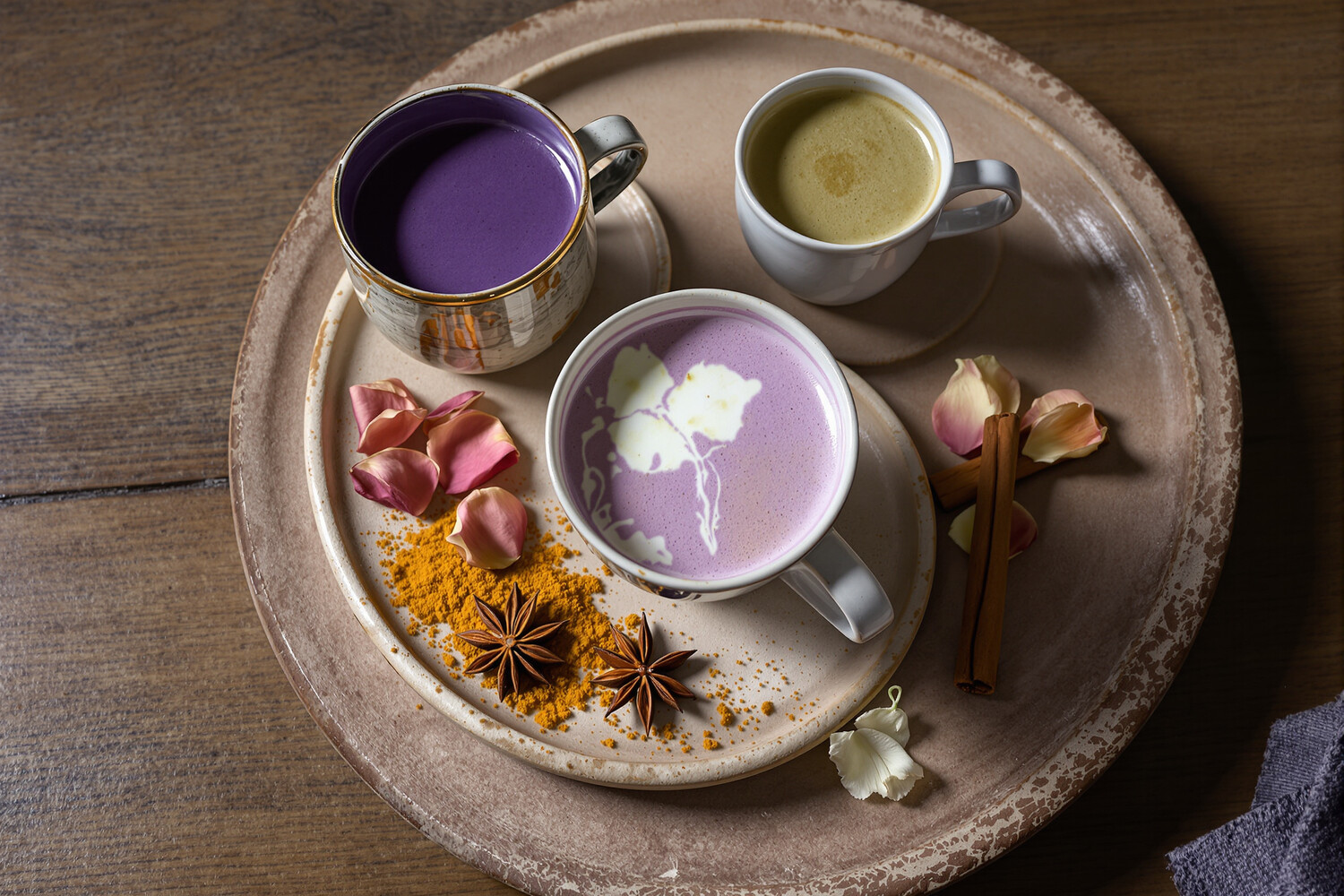
Not all milks are created equal when it comes to Ube. Here is what you can expect:
- Whole dairy milk: produces a creamy, classic purple with excellent colour stability.
- Oat milk: tends to enhance a soft lavender tone thanks to its naturally mild pH.
- Almond milk: can sometimes lighten the shade slightly due to its lower protein content.
- Coconut milk: often deepens the colour, giving a richer, more saturated purple.
If you want the most consistent and vivid colour every time, we recommend testing a small batch with your preferred milk first, then adjusting the ratio of Ube powder to milk to reach your desired intensity.
3. Water and Milk Temperature
Heat plays an important role too. When anthocyanins are exposed to high temperatures for an extended period, they can degrade slightly, softening the colour over time. This is why:
- A latte made with steaming hot milk may appear slightly lighter after a few minutes than it did right after mixing.
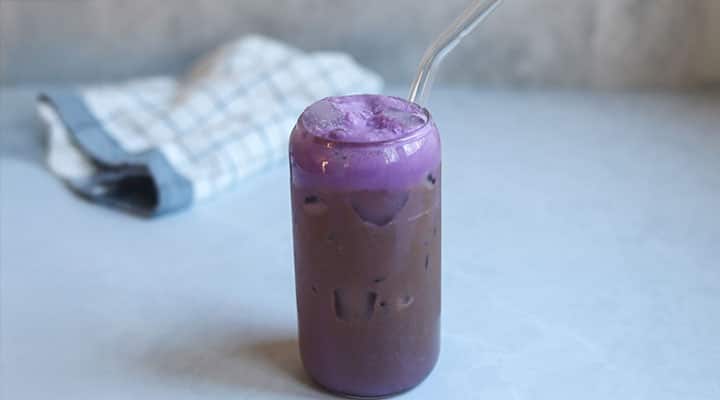
- A cold Ube Latte or iced version tends to hold its vibrant colour longer, since the pigments are more stable at lower temperatures.
If you love a bold, saturated purple, an iced Ube Latte is often your best option. 🧊
4. Exposure to Air and Light
Like many natural plant-based ingredients, anthocyanins can be sensitive to prolonged exposure to light and oxygen. If your prepared latte sits out for a while before you drink it, you may notice a gentle fading or a shift towards a duller tone. This has no impact on taste or safety. It is simply the natural pigment settling.

5. The Quality and Concentration of Your Ube Powder
The vibrancy of your latte's starting colour depends heavily on the quality of the Ube powder itself. A premium, well-processed Ube powder retains more of its natural anthocyanin content, which means:
- A richer initial colour
- Better resistance to fading
- A more consistent shade batch after batch
This is why sourcing a high-quality, pure Ube powder makes such a visible difference in your final cup. 🌟
Is a Colour Change a Sign of a Problem?
Not at all. A colour shift is a natural chemical reaction, not a sign of spoilage or poor quality. In fact, it is often reassuring proof that your Ube powder is made from real, natural yam pigments rather than artificial colouring, which would typically stay flat and unchanging regardless of pH or temperature.
If you ever notice an unusual smell, taste, or texture, that would be the actual indicator to check your product's freshness, not the colour alone.
How to Get a Consistently Vibrant Purple Ube Latte 💜
If you want to minimise colour variation and enjoy that signature deep violet every time, here are some simple, effective tips:
Choose the Right Milk Base
Whole dairy milk or coconut milk generally offer the most stable and vivid purple tones.
Mix Your Ube Powder Properly
Always dissolve your Ube powder in a small amount of warm (not boiling) water or milk first to create a smooth paste before adding the rest of your liquid. This helps distribute the pigment evenly and avoids clumping, which can make the colour look patchy.
Serve It Fresh
For the most photogenic and flavourful experience, enjoy your Ube Latte shortly after preparing it, whether hot or iced.
Store Your Ube Powder Correctly
Keep your Ube powder in a cool, dry place, away from direct sunlight, and seal the packaging tightly after each use. This preserves the natural pigments and ensures your next latte is just as vibrant as the last.
Experiment With Ratios
If you would like a deeper colour, simply increase the amount of Ube powder slightly. If you prefer a lighter, pastel look, reduce it. This gives you full creative control over your drink. 🎨
The Beauty of a Natural Product
At the end of the day, the colour variations you see in your Ube Latte are a beautiful reminder that you are working with a real, natural ingredient, not a synthetic shortcut. Every subtle shift from violet to lilac to a soft blue undertone reflects genuine plant chemistry at work.
Rather than something to worry about, think of it as part of the experience. Just like a cup of tea can look slightly different depending on how long it steeps, your Ube Latte tells its own little story with every sip.
Final Thoughts
So, why does your Ube Latte change colour? It comes down to a few key factors: the pH of your ingredients, the type of milk you choose, temperature, exposure to air and light, and the quality of your Ube powder. None of these are cause for concern. They are simply signs that you are enjoying an authentic, naturally pigmented product.

If you are looking for a premium Ube powder that delivers a vibrant colour and smooth, authentic flavour every time, you are in the right place. Explore our range today and discover just how magical your next Ube Latte can be. 💜✨
Ready to begin your ube ice cream adventure? Start with quality ingredients, follow our proven recipe, and prepare to enjoy one of the world's most beloved frozen desserts in the comfort of your own home. Your taste buds and your guests will thank you for the effort.
👉 Order your 100% natural organic ube powder at ube.co.uk
👉 Explore our healthy recipes and join the community of ube enthusiasts!
👉 Subscribe to our newsletter to receive our ube tips and inspiration every week.


